
Best Books on AI for Advancing Your Knowledge in Artificial Intelligence and Data Science
If you’re looking to deepen your understanding of artificial intelligence and data science, exploring some of the best books on AI is one of the smartest moves you can make. Whether you’re just starting out or already working with AI Multifamily Underwriting, the right literature can give you both the theory and the practical insight you need.
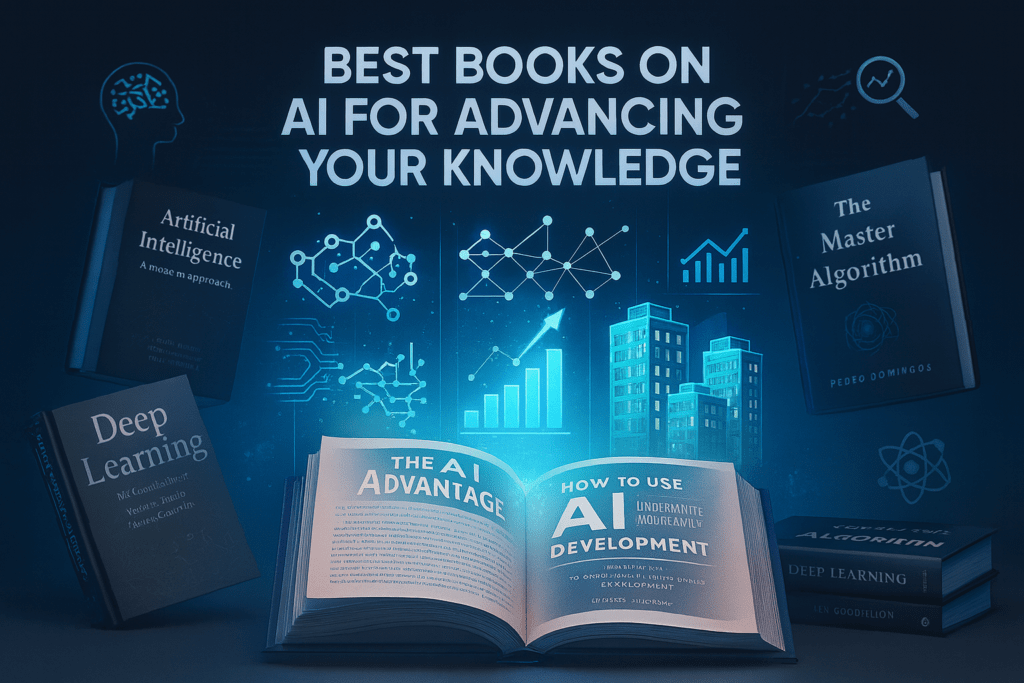
In the book The AI Advantage: How to Use AI to Underwrite Multifamily Development, author Tim H. Safransky demonstrates how investors may utilize AI to make more profitable, quicker, and intelligent decisions. This book provides a clear, simple way to use AI to enhance underwriting and increase returns, regardless of your level of experience.
Why These Books Matter for AI Enthusiasts and Real Estate Pros
Before diving into the list, however, it’s worth noting why reading well-chosen AI books can help you, especially if you’re leveraging AI Multifamily Underwriting in your real estate investing.
- Build a Strong Foundation – Many of the best books on artificial intelligence lay down clear frameworks so that when you apply AI to underwriting, your decisions are built on solid ground.
- Understand Deep Learning – Books on deep learning help you grasp models that can predict property rents, expenses, and risk more accurately.
- Make Better Investment Decisions – By understanding machine learning theory and applications, you can better interpret the outputs of AI underwriters and stress-test your real estate deals.
The Best AI Books to Read for Expanding Your Knowledge and Skills
Here are some of the best books on AI, carefully selected to suit a variety of learning goals and levels.
1. The AI Advantage: How to Use AI to Underwrite Multifamily Development by Tim H. Safransky
This book serves as a powerful guide for real estate investors, developers, and anyone seeking to apply artificial intelligence in multifamily underwriting. Moreover, Tim H. Safransky clearly explains how AI can analyze deals with greater accuracy, reduce human error, and ultimately speed up the entire underwriting process.
Moreover, it offers a simple, step-by-step approach to using AI for better investment decisions. As a result, it stands out as one of the best books on AI for real-world applications, especially for readers interested in AI Multifamily Underwriting.
2. Artificial Intelligence: A Modern Approach by Stuart Russell and Peter Norvig
This is often considered the “AI bible.” It covers everything from search algorithms, logic, probabilistic reasoning, to deep learning and reinforcement learning. It’s one of the best books on artificial intelligence for self-learning if you want rigorous theory.
3. Deep Learning by Ian Goodfellow, Yoshua Bengio & Aaron Courville
If you want to understand deep learning concepts, this book is a go-to. Moreover, it clearly breaks down neural networks, backpropagation, convolutional networks, and more. Consequently, if you’re searching for the best books to grasp deep learning, this one easily stands out as a top pick.
4. The Master Algorithm by Pedro Domingos
This one is more philosophical and big-picture. Domingos explores five “tribes” of machine learning (like connectionism and Bayesian learning) and imagines a future “master algorithm.” It’s very accessible and makes for a great read among the best books on AI.
How These Books Help with AI Multifamily Underwriting
Understanding multifamily underwriting in today’s AI-driven real estate landscape requires more than just financial knowledge—you need strategic thinking, technological insight, and the ability to analyze data at scale. The books highlighted in this guide equip investors, analysts, and developers with the tools to combine traditional underwriting principles with modern artificial intelligence. By mastering both, you can make faster decisions, minimize risk, and unlock more profitable multifamily opportunities.
- Link Theory to Practice: By understanding the mathematical and computational ideas in books like Artificial Intelligence: A Modern Approach and Deep Learning, you can better interpret what underwriting tools are doing when they forecast rent or risk.
- Improve Model Oversight: Hands-on texts (like Géron’s book) help you audit or tweak machine learning models used for underwriting, making your underwriting more reliable.
- Strategic Thinking: Philosophical and forward-looking books (like Domingos’ The Master Algorithm or Bostrom’s Superintelligence) sharpen your view of how AI might change real estate investing long-term.
- Communication & Learning: Books like Janelle Shane’s make AI accessible, helping you explain complex models to non-technical partners — very useful in the world of syndicators, LPs, and general partners in multifamily investing.
How to Select the Best Book Based on Your Goals
Choosing the right book can make all the difference in how effectively you learn, grow, or stay inspired. With countless titles available—especially in fast-evolving fields like technology, AI, business, and personal development—it’s easy to feel overwhelmed. The key is to select a book that aligns with your goals, matches your current knowledge level, and fits the way you prefer to learn. By focusing on clarity, credibility, and relevance, you can make sure every book you pick truly adds value.
Smart Tips to Choose the Right Book
- Define Your Purpose Clearly
Identify whether you’re reading for learning, professional growth, entertainment, or skill-building. Your goal determines the type of book you should choose. - Check Your Current Knowledge Level
Pick a beginner-friendly book if you’re new to the topic, or go for advanced titles if you already have a foundational understanding - Look at the Author’s Credentials
Choose books written by credible experts, thought leaders, or professionals with real-world experience in the field. - Read Reviews and Ratings
Check reader feedback on Amazon, Goodreads, or Google to understand the book’s strengths and weaknesses before buying. - Preview the Book’s Structure
Explore the table of contents, sample pages, or summaries to see if the writing style and complexity fit your preferences. - Consider Your Learning Style
If you prefer visuals, choose books with diagrams. If you like stories, opt for narrative-style books. Match the format to how you learn best.
Conclusion
Learning from the best books on AI is not just about theory; it’s about strengthening your real-world skills, especially if you’re applying AI in real estate through AI Multifamily Underwriting. By combining foundational texts, hands-on coding guides, and visionary works, you can build a more complete, powerful understanding of artificial intelligence and data science.
Whether you’re self-learning, preparing to hire AI-enabled underwriting tools, or trying to scale your multifamily real estate business with smarter AI-based decision-making, these books are powerful allies.
Get your copy of The AI Advantage: How to Use AI to Underwrite Multifamily Development by Tim H. Safransky on Amazon and start making faster, smarter, and more profitable real estate decisions today.
Subscribe to Our YouTube Channel: AI Multifamily Developments
Get free expert tips, walkthroughs, and practical tools to elevate your real estate strategy. Subscribe to the AI Multifamily Developments YouTube channel and stay ahead of industry trends.